
What is L-Proline Used For?
| Chemical and Biological Properties Among amino acids, L-Prolineis unique in that it contains a secondary amine group, a structure that endows it with special chemical properties. From a molecular structure perspective, it has a pyrrolidine ring, which allows it to form specific peptide bonds. In proteins, due to the rigid cyclic structure of L-Proline, its residues cause kinks or twists in the polypeptide chain. Additionally, it is highly soluble in water and ethanol — a property that enables it to function smoothly in aqueous biological environments such as inside cells and body fluids. This solubility also provides a solid foundation for its compound application in cosmetics: it can be easily integrated into water-based, alcohol-based, and other skincare formulations without easily conflicting with other ingredients. | 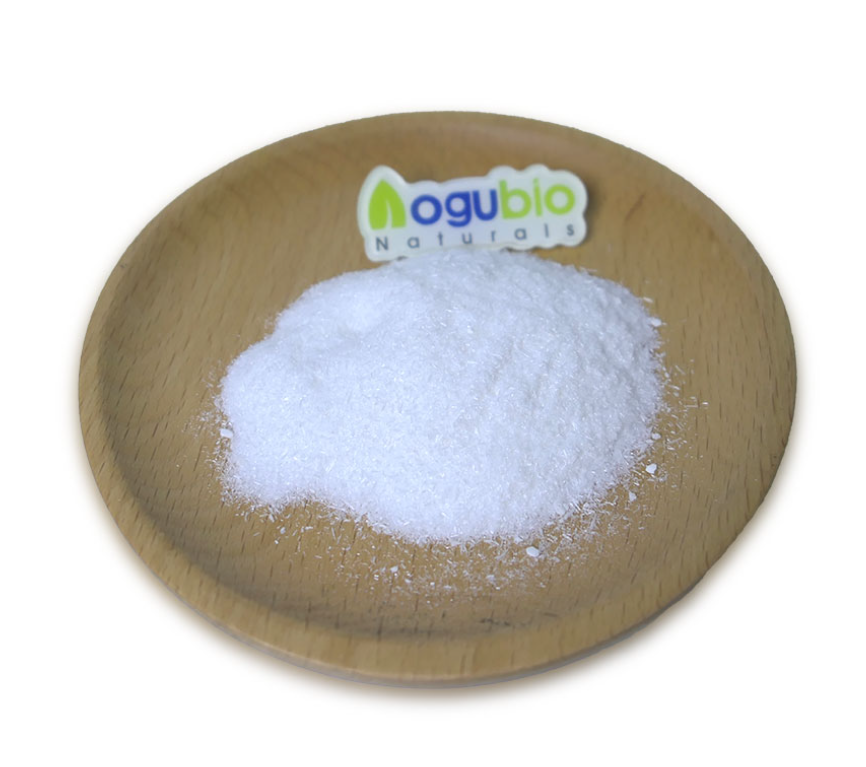 |
Applications in the Pharmaceutical Industry
- Component of Cell Culture Media
L-Proline is a key component of cell culture media in the commercial biomanufacturing of therapeutic recombinant proteins and monoclonal antibodies. For example, in biopharmaceutical production, cell cultures require a precisely balanced nutrient environment, and L-Proline provides the essential "building blocks" for cell growth, supporting cells in synthesizing these high-value therapeutic proteins. A study in the field of biopharmaceutical technology showed that adding L-Proline to cell culture media can improve the production efficiency and quality of recombinant proteins.
- Intermediate in Drug Synthesis
L-Proline also serves as a critical intermediate in the synthesis of various drugs. Take antihypertensive drugs as an example — the synthesis of medications such as captopril and enalapril requires L-Proline. Leveraging its unique molecular structure, L-Proline helps chemists construct the complex molecular structures needed for these drugs: during the synthesis process, it participates in chemical reactions to form specific chemical bonds and functional groups that are essential for the drug’s activity and efficacy.
Applications in the Cosmetics Industry
- Promoting Collagen Synthesis: Suitable for Core Anti-Aging Products
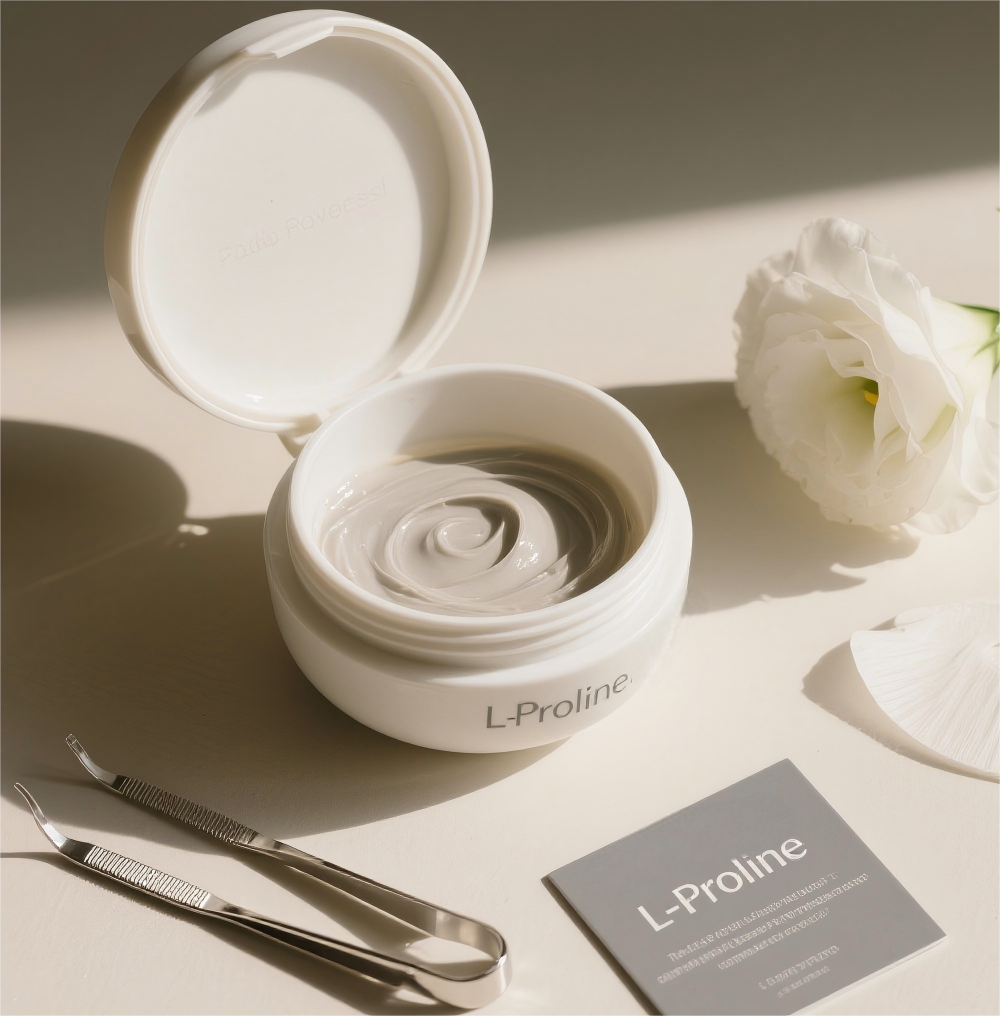
L-Proline is the "core building block" of collagen — approximately 13% of each collagen molecule is composed of proline. Its cyclic structure enhances the stability of collagen fibers and reduces the rate at which collagen is broken down by enzymes. In cosmetics, L-Proline is often used as a core ingredient in anti-aging products, widely applied in categories such as anti-wrinkle creams, firming serums, and neck creams.
In addition to the previously mentioned study on Neauvia mesotherapy (its formula contains 2% L-Proline, which can increase collagen content in the dermis by 19% within 8 weeks; Source: Neauvia’s 2023 clinical test report), a double-blind experiment published in the international journal Journal of Cosmetic Dermatology in 2022 also confirmed: continuous use of a serum containing 1.5% L-Proline for 12 weeks reduced the depth of skin wrinkles by 23% and improved skin elasticity by 17% in subjects. Such products are particularly suitable for people with skin showing early signs of aging (25 years and above) and those with anti-aging needs. By stimulating the production of new collagen, they improve dynamic and static wrinkles such as nasolabial folds and forehead lines, while enhancing skin support to alleviate facial sagging.
- Improving Skin Hydration and Barrier Function: Covering Full Range of Basic Skincare Products
As a natural humectant, L-Proline’s moisturizing mechanism has a dual effect of "attracting water" and "locking water": on one hand, it absorbs moisture from the air through hydroxyl groups; on the other hand, it binds to ceramides and cholesterol in the skin’s stratum corneum to form a stable moisturizing network, reducing transepidermal water loss (TEWL). Based on this property, it is widely used in basic skincare products such as moisturizing lotions, repairing creams, and toners for sensitive skin.
- Potential Antioxidant and Anti-Inflammatory Effects: Suitable for Sensitive Skin and Repair Products
In recent years, multiple studies have confirmed that L-Proline can exert antioxidant and anti-inflammatory effects by scavenging reactive oxygen species (ROS) in the skin and inhibiting the release of inflammatory factors (such as TNF-α and IL-6). This property makes it a preferred ingredient in products such as repair serums for sensitive skin, post-procedure soothing masks, and anti-acne gels.
A 2023 study in the International Journal of Cosmetic Science pointed out: a soothing serum containing 1% L-Proline reduced the content of free radicals in the skin by 35% within 1 hour after UV exposure and decreased skin redness by 28%. In anti-acne products, L-Proline helps reduce redness and swelling after acne inflammation, while promoting the repair of damaged skin tissue and reducing the probability of acne mark formation. In post-aesthetic procedure care products (e.g., after intense pulsed light or microneedling), it accelerates the reconstruction of the skin barrier, relieves post-procedure discomfort such as dryness and stinging, and shortens the recovery period.
- Synergistic Effect: Enhancing Overall Skincare Efficacy of Formulations
L-Proline also acts as a "synergist" in cosmetics — when compounded with popular anti-aging ingredients such as vitamin C, retinol, and peptides, it can enhance the stability and efficacy of these ingredients. For example, vitamin C is prone to oxidation and inactivation, but the antioxidant properties of L-Proline can slow down its degradation rate, extending the product’s shelf life by more than 30%. When combined with retinol, L-Proline reduces the skin irritation caused by retinol while promoting the conversion of retinol into its active form (retinoic acid), enhancing anti-wrinkle effects.
In conclusion, L-Proline has a wide range of applications, with particularly prominent roles in the pharmaceutical and cosmetics industries. In the cosmetics field, relying on its multi-dimensional skincare efficacy and good formulation compatibility, it has become an "all-round ingredient" covering everything from basic moisturization to high-end anti-aging, and from daily care to special repair, providing scientific and effective solutions for various skincare needs.
- Name: Yuik
- E-mail: sales02@nahanutri.com
- WhatsApp:+8618066950297